
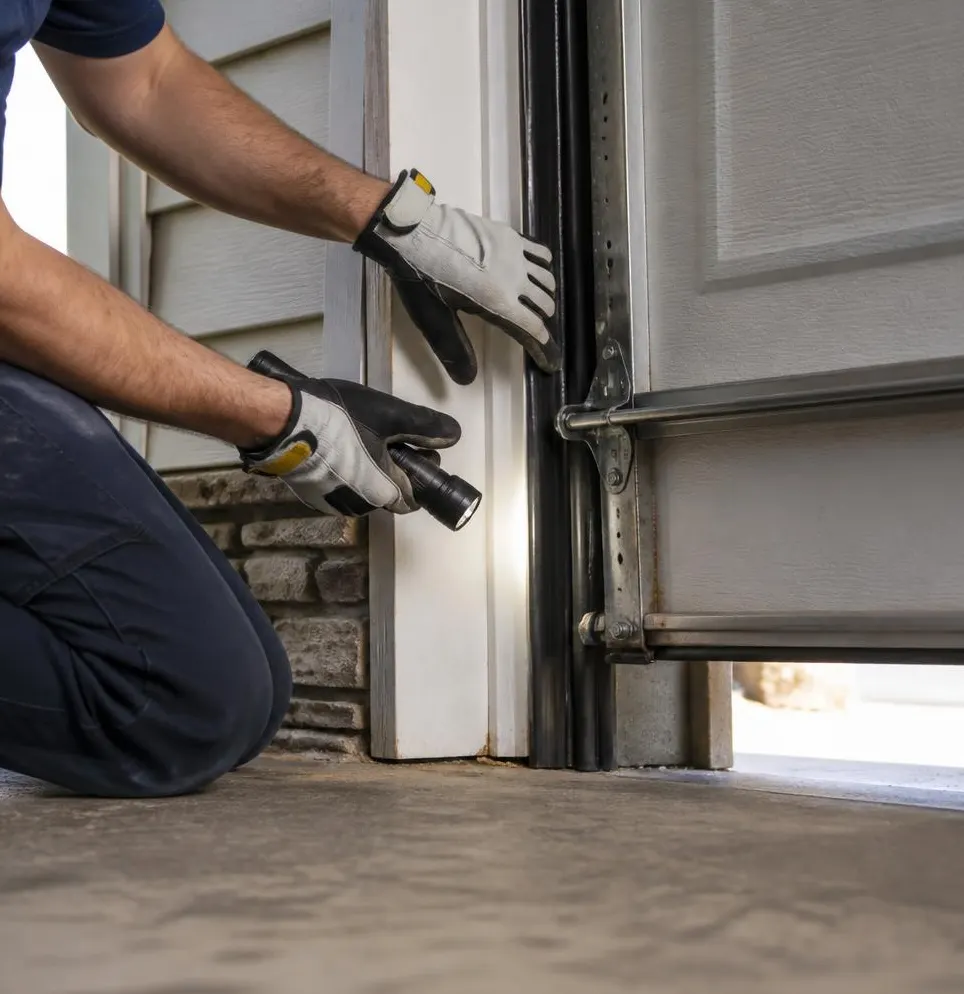
Get Your Garage Door Ready Before the First Hard Freeze
The short answer: walk your garage door through five quick checks before winter — weatherstripping, balance, lubrication, opener battery backup, and hardware — because cold, dry air and big temperature swings put real stress on every moving part. A door that worked fine in September can start binding, groaning, or refusing to open once overnight temps start dropping into the 20s and 30s.
Why Fall in Utah Is Hard on a Garage Door
Along the Wasatch Front, including Roy and the surrounding Ogden, Layton, Clearfield, and Clinton area, homeowners deal with a specific combination of conditions: cold, snowy winters, dry air year-round, and day-to-night temperature swings that can be 30 degrees or more. That swing matters more than people think. Steel contracts in the cold, rubber seals stiffen and shrink, and lubricant that worked fine in July can thicken up or dry out by December. None of this breaks a door overnight, but it adds friction and strain that eventually shows up as a slow-to-close door, a chirping opener, or a dead-feeling remote on a frigid morning.
1. Check and Replace Weatherstripping
The rubber seal along the bottom of the door and the vinyl strips along the sides are your first defense against cold air, blowing snow, and dust. Dry air and UV from high-altitude sun break this rubber down faster than most people expect, and once it cracks or flattens, cold drafts come right into the garage.
- Run your hand along the bottom seal — if it's stiff, cracked, or doesn't spring back after you press it, it needs replacing.
- Check the side and top seals for gaps where daylight shows through.
- Replacement kits typically run $20–$50 for the bottom seal, depending on door width — a small cost compared to the heating loss from a drafty garage all winter.
2. Test the Door's Balance
Garage door springs do the heavy lifting, and cold metal behaves differently than warm metal. Springs that were holding fine in summer heat can feel noticeably tighter or looser once temperatures drop, especially with the wide day-night swings common here.
- Disconnect the opener by pulling the release cord (usually a red handle on the trolley).
- Lift the door halfway by hand and let go.
- A properly balanced door stays in place. If it drifts down or shoots up, the springs are out of balance and working harder than they should.
Do not attempt to adjust torsion springs yourself. They're under extreme tension, and cold makes them more brittle and more likely to snap unexpectedly. This is a job for a trained technician, not a DIY afternoon.
3. Lubricate the Moving Parts
Hinges, rollers, and the torsion spring itself all need fresh lubricant before winter. Skip WD-40 for this — it's a cleaner, not a lubricant, and it can actually strip away protective grease. Use a silicone or lithium-based garage door lubricant instead.
- Apply to hinges, roller bearings, the torsion spring, and the track rollers (not the track itself).
- Wipe off excess so it doesn't attract dust and grit.
- Do this in fall and again partway through winter if you notice new noise or stiffness.
4. Check the Opener and Battery Backup
Cold weather is brutal on batteries, including the backup battery in openers that have one. A battery that seemed fine in August can fail during a winter power outage, right when you need the door most.
- Test the backup battery by unplugging the opener briefly and confirming the door still operates.
- Replace the remote and wall-control batteries now rather than waiting for a cold-morning failure.
- Locate and test the manual release so you know how to open the door by hand if the power goes out during a storm.
5. Inspect Hardware, Rollers, and Panels
Humidity swings and summer hail can leave small dents or loosened fasteners that are easy to miss until a panel starts rattling in winter wind.
- Check nuts and bolts on the track brackets and tighten any that have loosened.
- Look over panels for hail dings from summer storms — small dents won't ruin function but can trap moisture and rust over a snowy winter.
- Confirm rollers spin freely and aren't chipped or worn, since stiff rollers make the opener work harder in the cold.
When to Call Roy Garage Door Service
Some of this is safe DIY territory — seals, lubrication, battery swaps. But if your balance test shows a door that won't hold position, if you hear grinding or popping from the spring area, or if the opener strains and reverses on cold mornings, it's time to call in a technician. Roy Garage Door Service handles Spring Replacement for doors showing uneven tension or visible wear, and our Maintenance & Tune-Ups service covers a full inspection — balance, hardware, lubrication, and opener diagnostics — so small issues get caught before a January cold snap turns them into a stuck door and a frozen car in the driveway.
If you're in Roy, Ogden, Layton, Clearfield, Clinton, Riverdale, South Ogden, or West Haven and want your garage door checked before winter settles in, give Roy Garage Door Service a call. We show up on time, do the job right, and charge a fair price — every time.